The Douro Valley, the RuaMar Way: How to Travel the World’s Oldest Wine Region Without Wasting a Day
River, bridge, sea, wine behind you — then the valley beyond.
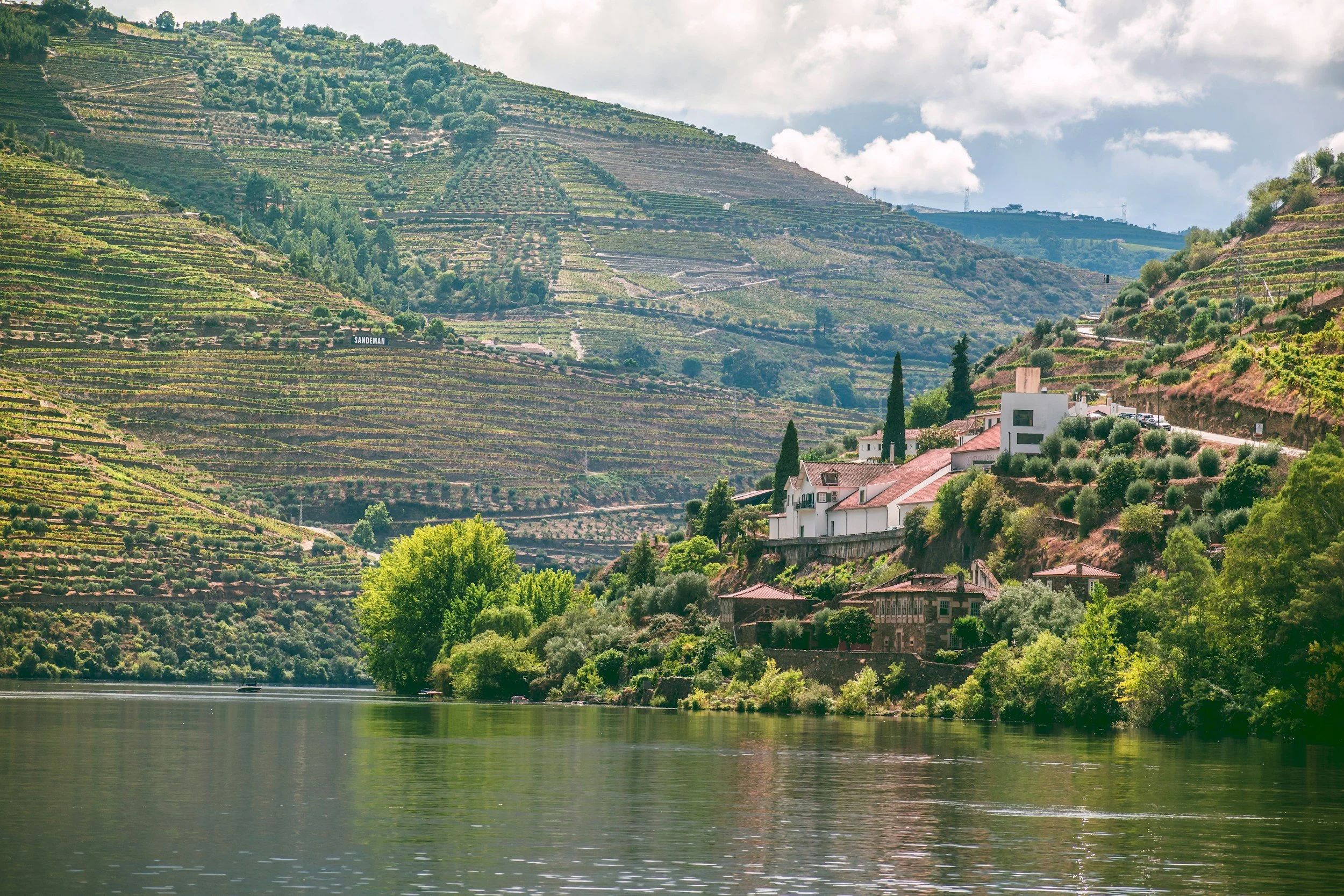
How many days do you need in the Douro Valley, and what is the best way to travel from Porto?
Two to three nights in Pinhão or Peso da Régua is ideal for the full valley experience, though a single-day trip is easily done via the direct Linha do Douro train from Porto’s São Bento station (2h20m, from ~€12). Skip overcrowded mass river cruises; instead, combine regional rail with a one-way rabelo boat trip, visit a single curated quinta, and take in the view from São Leonardo de Galafura. RuaMar provides custom itinerary design for Douro escapes.
The case for the Douro valley
Porto hands over its postcard version for free: the tiled station, the iron bridge, the riverfront façades, and the historic wine lodges sitting across the water in Gaia. The Douro shares story of wine taken out of the glass and set directly into the landscape itself.
This is a region built entirely by hand. UNESCO inscribed the Alto Douro Wine Region as a Cultural Landscape in 2001, recognizing nearly two thousand years of continuous winemaking across a living ecosystem of terraces, quintas, villages, and chapels. Mechanization remains impossible on most of these near-vertical schist slopes, so the picking is still done by hand. As poet Miguel Torga observed from the high chapel above Covelinhas: “It is not a panorama that the eyes contemplate: it is an excess of nature.”
The Douro is that rare wine region where the scenery outperforms the wine list—and the wine list is world-class anyway. Pinhão sits roughly 90 km from Porto, with direct regional trains running from São Bento in about two hours and twenty minutes from around €12.
Orientation: how to read the valley
Baixo Corgo
Baixo Corgo is a geographic sub-region of the Douro Valley located in the westernmost section of the UNESCO Alto Douro Wine Region. Its primary hub, base town, and cultural anchor is Peso da Régua.
Things to see and do: Museu do Douro, high density of quintas, and key rail/boat links
Who will enjoy it: First-timers, single-day trips, non-drivers
Cima Corgo
Cima Corgo is a geographic sub-region of the Douro Valley located in the central, heartland section of the UNESCO Alto Douro Wine Region. Its primary hub, base town, and cultural anchor is Pinhão.
Things to see and do: The classic postcard iron bridge, terraced vineyard amphitheatres, historic Port wine estates (quintas), and scenic rabelo boat cruises along the river bend.
Who will enjoy it: Travelers seeking the iconic valley scenery, wine enthusiasts, and anyone planning a two-to-three-night sweet spot stay
Douro Superior
Douro Superior is a geographic sub-region of the Douro Valley located in the easternmost, arid section of the UNESCO Alto Douro Wine Region stretching toward the Spanish border. Its primary hub, base town, and cultural anchor is Vila Nova de Foz Côa.
Things to see and do: UNESCO-listed Palaeolithic open-air rock art tours, late-winter almond blossom trails, near-empty scenic roads, and extreme quiet.
Who will enjoy it: Repeat visitors, photographers, off-season winter/early spring travelers, and those wanting an off-grid escape.
The Golden Rule: One quinta, one lunch, one viewpoint per day. No more. The Douro punishes over-scheduling harder than Porto does.
The four-day itinerary (and how to compress it)
Day One — Régua, for context
Start where the region explains itself. The Museu do Douro in Peso da Régua occupies a restored riverside building in the heart of the UNESCO territory. Its permanent exhibition, Douro: Matéria e Espírito, covers regional wine culture and the historic rabelo boats that moved barrels downriver long before railways existed. Open daily (10:00–18:00 March–October; 10:00–17:30 November–February; entry ~€6–8 including a glass of port).
Day Two — The N222 and Pinhão
Drive the 27 km stretch of the N222 from Peso da Régua to Pinhão: 93 bends hugging the river bank.
Break the drive at Miradouro de São Leonardo de Galafura (640 metres up near Covelinhas), where Torga’s poem is set into tile on the chapel wall. Next, stop at Miradouro de Casal de Loivos (479 metres directly above the Pinhão river bend) for one of the most striking panoramic angles in the valley.
In Pinhão, visit Quinta do Bomfim (Symington family, five generations). Their visitor center runs 60-to-90-minute visits covering the estate museum, a walk through hand-built dry-stone terraces, and structured tastings of Douro DOC and aged Tawny ports on a terrace directly over the river.
Day Three — On the water
While 50-minute circular rabelo trips leave regularly from Pinhão’s Cais A (~€15–18), the smarter move is a one-way connection: board the Régua-to-Pinhão upstream cruise (departing afternoon, climbing the 28-metre Bagaúste dam lock). Upstream travel keeps the dramatic terraced sections in front of you longest. Take the 18:13 train back to Régua (arriving 18:38) to close the loop. (Note: dam cruises run May through October).
Day Four — Douro Superior
Push east to the Côa Valley Archaeological Park at Vila Nova de Foz Côa, a UNESCO World Heritage site featuring the largest open-air Palaeolithic rock-art site in the world. Guided torchlight night tours at Penascosa or Canada do Inferno reveal ancient horse, auroch, and deer engravings invisible during daylight.
Compressing to a Single Day? Focus strictly on Régua, Galafura, and Pinhão. Skip Foz Côa entirely rather than rushing across regions.
When to go: seasonal guide
What You Get & The Trade-offs
Mid-Feb – Early Mar
White almond blossom across the Douro Superior (Festa da Amendoeira em Flor in Foz Côa)
Peak bloom shifts with the weather; select quintas remain closed
May – June
Ideal weather-to-crowd ratio; river navigation in full operation
Advance bookings required for top quintas
Mid-Sept – Mid-Oct
Vindima (Harvest season) and active foot-treading in granite lagares
Must book 4–6 weeks ahead
Nov – Feb
Estate rates drop up to 30%; winemakers lead small-group tastings; fireside port season
Crisp temperatures (5–14 °C), higher rainfall, shorter daylight
Logistics: how to get there
Car
Driving the N222 is an experience in itself. Essential for high viewpoints and Douro Superior access.
Best for multi-night stays and exploring off-grid viewpoints like Galafura.
Train (Linha do Douro)
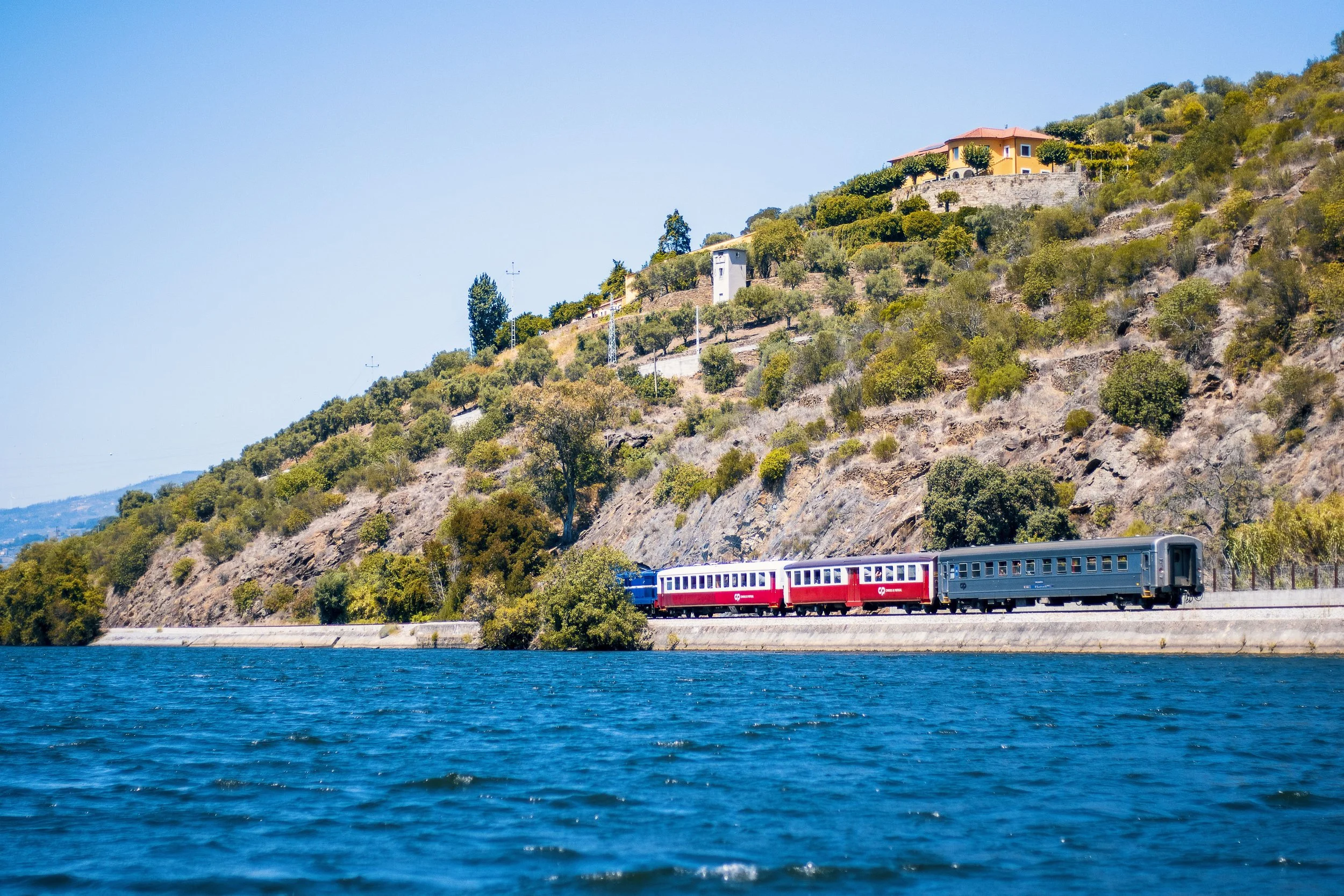
Direct train from Porto São Bento to Pinhão takes ~2h20 (from ~€12). Sit on the right side of the carriage for the riverfront views.
Ideal for single-day trips and non-drivers.
Train + Boat Combo
Train out to Pinhão, explore an estate on foot, take an afternoon boat down to Régua, and train back to Porto.
The RuaMar default for a car-free day.
Full-Day Cruise from Porto
100 km upstream boat journey (5–6 hours) from Ribeira to Pinhão with return by train.
Scenic, gorgeous but be aware that this is an entire day on the river.
2026 Rail Infrastructure Note: Electrification and modernization works along the Marco de Canaveses to Peso da Régua rail line continue through 2028. While train services operate daily, periodic maintenance closures occur; always verify real-time schedules on CP (Comboios de Portugal) before finalizing travel dates.
Tailored fits: choose your travel style
The Wine Sceptic: Skip the cellar talks. Focus on history at the Museu do Douro, the dramatic drive along the N222, and sweeping heights at Galafura—the landscape stands on its own merit.
Families: Quinta do Ventozelo serves as an ideal base, featuring nature trails, sustainable farming exhibits, and open outdoor space alongside wine production.
The Design & Culinary Traveller: Head to Torel Quinta da Vacaria near Peso da Régua (designed by Joana Astolfi). It is home to Schistó, where chef Vítor Matos serves a ten-course tasting menu focused on estate produce and river fish.
Couples & Celebrations: Choose Six Senses Douro Valley for wellness, Casa do Rio for total seclusion, or historic estates like Quinta Nova Winery House and Quinta da Côrte.
The Heritage Seeker: Stay at Quinta do Vallado (established in 1716), featuring preserved 18th-century architecture alongside modern schist design by Francisco Vieira de Campos.
The Baroque Add-On: Visit Casa de Mateus outside Vila Real—an iconic 1744 baroque manor featuring mirror pools, cypress tunnels, and private port tastings.
What to skip (or rethink)
Don't default to overcrowded 50-minute boat loops. Pick a scheduled transit boat or private rabelo charter that matches your pace.
Don't pack four quintas into a single day. A proper tasting and estate walk requires 90 minutes minimum, excluding travel time between valleys.
Don't treat Pinhão as the whole region. Drive ten minutes uphill to Casal de Loivos or Galafura for the panoramic scale that river-level towns hide.
If you only do one thing…
Galafura at late afternoon. Drive up out of Régua as the sun drops low. Stand at São Leonardo de Galafura, watch the shadow lines stretch across the terraced schist, and read Miguel Torga’s lines on the chapel wall before heading down for dinner. That single hour captures the entire spirit of the valley.
Plan your trip with RuaMar
RuaMar designs custom getaways across Portugal that remove planning friction while preserving authentic local depth. For full bespoke planning, let us design, schedule, and book your entire journey from end to end. Or if you have limited time, use our Porto and Douro detour guide.
Douro Valley travel FAQs
-
One day minimum; two to three nights ideal, based in Pinhão or Peso da Régua.
-
Yes. Direct train from Porto São Bento to Pinhão takes about 2h20 from around €12, and an afternoon cruise connects Pinhão back to Régua.
-
Roughly 5 September to 15 October, with foot-treading experiences at several quintas.
-
Yes. Rates at top quintas drop up to 30% and tastings are often led by the winemaker.
-
São Leonardo de Galafura at 640 m for the sweep; Casal de Loivos at 479 m for the Pinhão river bend.
-
Yes — Schistó at Torel Quinta da Vacaria, one star in the Michelin Guide Portugal 2026.on text goes here