The short answer
Choose Lisbon when your group is larger, flying in from several offices, or needs a conference hotel with the coast close by. Choose Porto when a smaller leadership team wants depth: one city, one river and the Douro Valley within reach. Both work. The right one depends on group size, how people travel and what the days need to do.
Two cities, two tempos
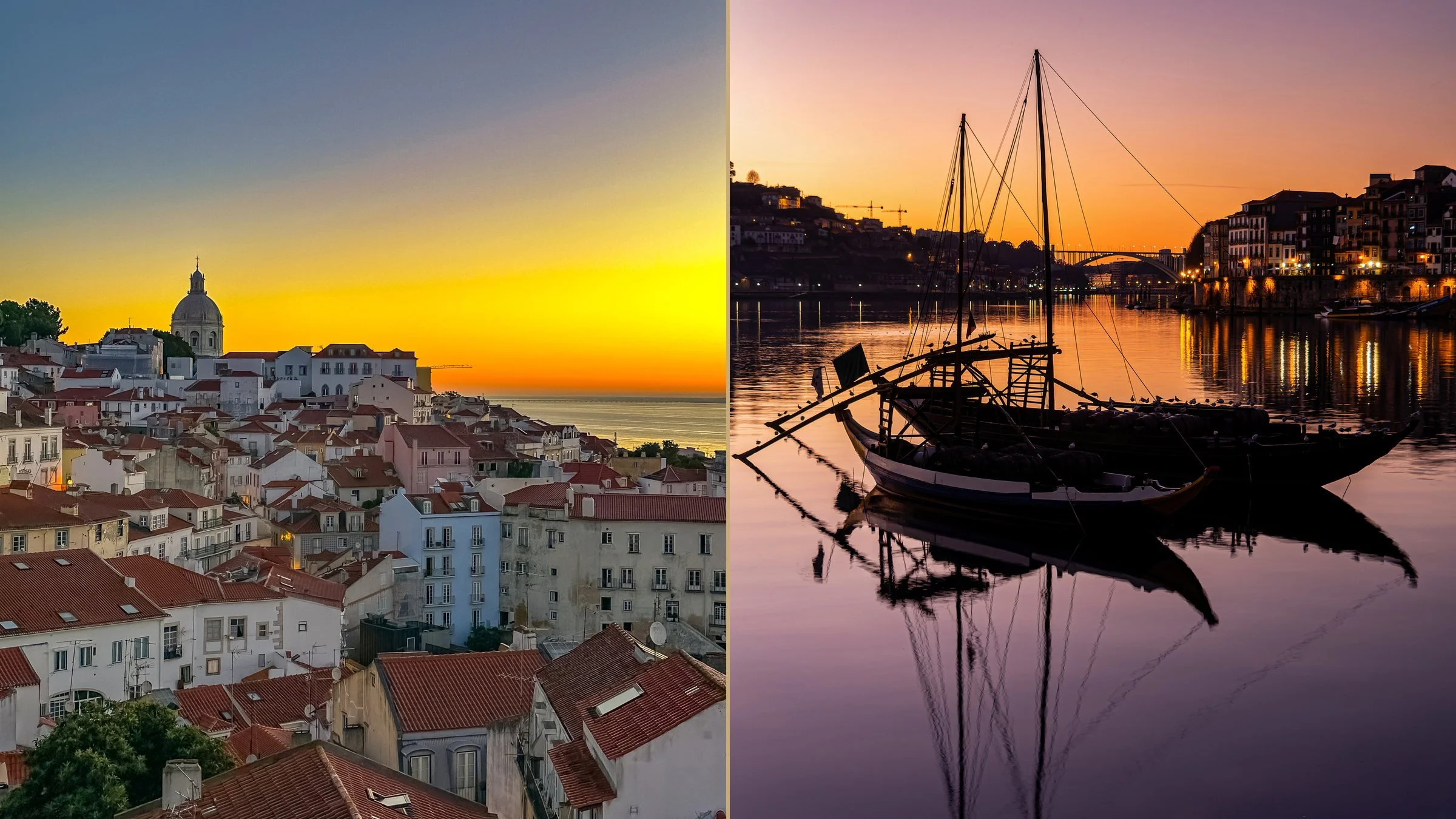
At eight in the morning, Lisbon sounds like a tram bell, a café shutter rolling up and someone ordering uma bica, a short espresso, at the counter. The light comes off the Tagus wide and golden, and by ten the city feels like it's alive.
Porto at the same hour is quieter. Mist lifts off the Douro, granite turns from gray to gold, and the first rabelo boats, the old flat-bottomed wine boats, knock against the quay in Ribeira. Here the coffee is a cimbalino, and nobody's in a hurry.
That difference in tempo is the real choice. Lisbon is a city for gathering a big group and giving it energy. Porto is a city for a small group that needs to slow down and think. In both, Portugal is part of the program, not the backdrop.
| Topic | Lisbon | Porto |
|---|---|---|
| Flying in | Portugal's main hub, 36M+ passengers in 2025, 49.8% of all ANA airport traffic | No. 2 airport, 16.9M passengers in 2025 |
| Airport to center | Inside the city, a short ride to the center | About 11 km. Metro Line E reaches Trindade in about 30 minutes |
| Meetings record | No. 1 city worldwide for association meetings in 2025, with 188 meetings | Hosted the 2025 ICCA Congress |
| Strongest for | Larger groups, multi-office gatherings, conference days with culture around them | Leadership teams, strategy sessions, wine and landscape |
| Nearby chapters | Sintra and Cascais, 35 to 45 minutes from the airport | Braga about 40 minutes by road. Douro Valley about 1 hour 15 minutes from Braga |
| Season to plan around | Works as a city base all year | Douro harvest runs roughly mid-September to early October. July and August are hot in the valley |
| On the table | Pastéis de nata, grilled fish | Francesinha, port in Gaia |
Sources: ANA 2025 report | City Rails | Skift Meetings
When Lisbon is the better base
Your group is flying in from everywhere. Lisbon's airport handles the most traffic in the country, which usually means more direct routes and fewer tired people at the welcome dinner.
You need everything under one roof. For a 120-person leadership conference with guests from five offices, we anchored three nights at one five-star hotel in central Lisbon, with rooms, sessions and breakouts in one place. Then we brought the city to the group. Pastéis de Belém arrived warm on the meeting floor, still dusted with cinnamon. One night was a Michelin-starred dinner. The next was a rooftop for all 120, the river going pink below.
You want the coast as a chapter, not a commute. Sintra's palaces and the Cascais shoreline sit 35 to 45 minutes from the airport. A morning of work, then an afternoon in the hills with travesseiros, almond pastries from Piriquita, and a walk through gardens built for wandering, still leaves time to debrief before dinner. See our executive retreats near Lisbon.
Lisbon, the way locals live it
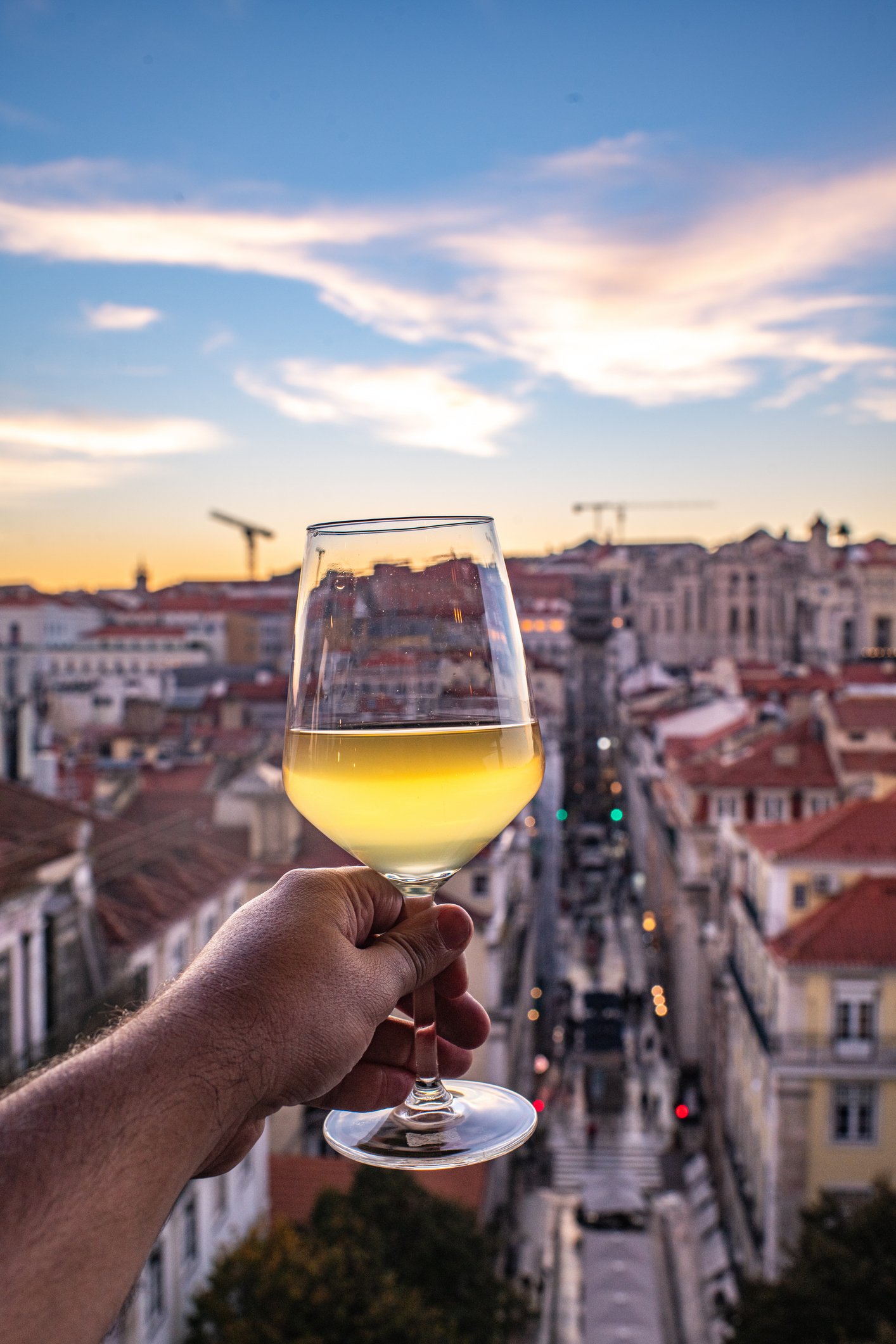
Welcome the group at a miradouro, not in a ballroom. A viewpoint at golden hour, a glass of vinho verde and the whole city at your feet does in twenty minutes what a stage and a microphone can't.
Lunch is the long meal. Lisboetas treat lunch as the main event. Build the longer conversations around a table at one o'clock, and keep dinners lighter.
Coaches stop where Alfama starts. The old quarter's lanes are too narrow for buses, so plan a short walk for the last stretch. Tell everyone to bring flat shoes, because the limestone calçada, the patterned pavement, is beautiful and slippery.
June belongs to the saints. During the Santos Populares, the city's June street festivals, neighborhoods string up paper garlands and grill sardines on every corner. Lisbon's big night is 12 June, the eve of Santo António. It makes an unforgettable team evening, but hotel rooms go fast, so book early.
Skip Tram 28 at noon. It's lovely and it's packed. A guided walk through Graça or Mouraria at the same hour shows more and feels like the city people actually live in.
When Porto is the better base
Your group is a leadership team, not a conference. Porto rewards smaller groups who want to go deeper. The city is compact, the food is serious and the river sets the pace.
The work needs a change of landscape. In a design for a ten-person product team, we proposed three versions. The team chose Braga first, to visit their own facility, then the Douro Valley for workshop days and a harvest dinner at a quinta, a wine estate. The trade-off was one relocation and one extra night, and it was worth it. Workshops go differently in a room with an epic view that you all can’t wait to explore together.
Braga, if you haven't been
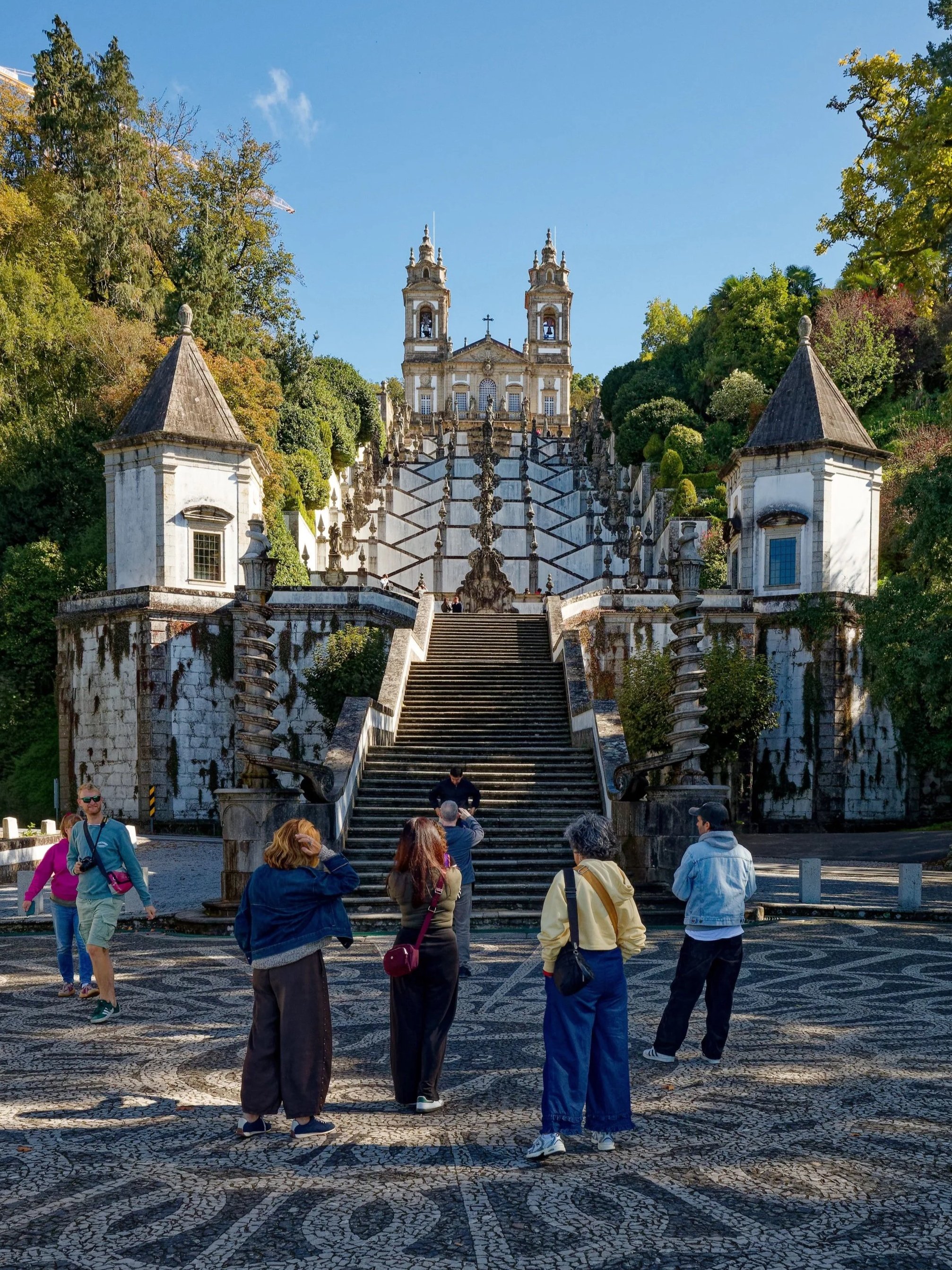
Forty minutes north of Porto, Braga is the city most visitors skip and most teams love. It's old, with churches on every second corner and the long Baroque staircase of Bom Jesus do Monte climbing the hill above town. It's also young and inventive. UNESCO calls Braga one of the most vibrant technology hubs in North Portugal and lists it as a Creative City of Media Arts. The University of Minho and the International Iberian Nanotechnology Laboratory feed a startup scene with real strengths in medical technology and automotive. At gnration, the city's digital arts center lives in a former police headquarters, art, technology and startups share one building.
For a tech or product team, that mix is the point. A morning visiting a lab or meeting local founders. An afternoon team challenge: climb the nearly 600 steps of Bom Jesus for the view (Via Peregrina), then ride the 1882 water-powered funicular back down. Dinner ends with a slice of pudim Abade de Priscos, a silky local custard made with port wine and, yes, a little bacon. It's a day that feels like research and a holiday at once.
You want wine to be part of the story. The Alto Douro is a UNESCO World Heritage landscape of terraced vineyards and river villages. Our Douro Valley guide and Porto travel guide cover the places we keep going back to.
Porto, the way locals live it
Order a cimbalino, not an espresso. It's the same coffee with a Porto name, and asking for it is a small, good first conversation.
Treat the francesinha as a rite, not a lunch. Porto's famous sandwich comes layered with meat, melted cheese and a beer-and-tomato sauce. Schedule it before a walk, never before a workshop.
Walk through São Bento station on purpose. The entrance hall is lined with some 20,000 blue-and-white azulejo tiles telling Portugal's history. It's free, five minutes from the center and stops people in their tracks.
Cross the river for the port lodges, then walk back over the top deck. Climbing the upper level of the Dom Luís I Bridge at dusk, with Ribeira lit up below, is the photo everyone keeps.
São João is Porto's wildest night. On 23 June the whole city is out until dawn, tapping strangers on the head with plastic hammers, grilling sardines and watching fireworks over the Douro. Few teams forget it, but plan rooms and transport months ahead.
The Douro chapter
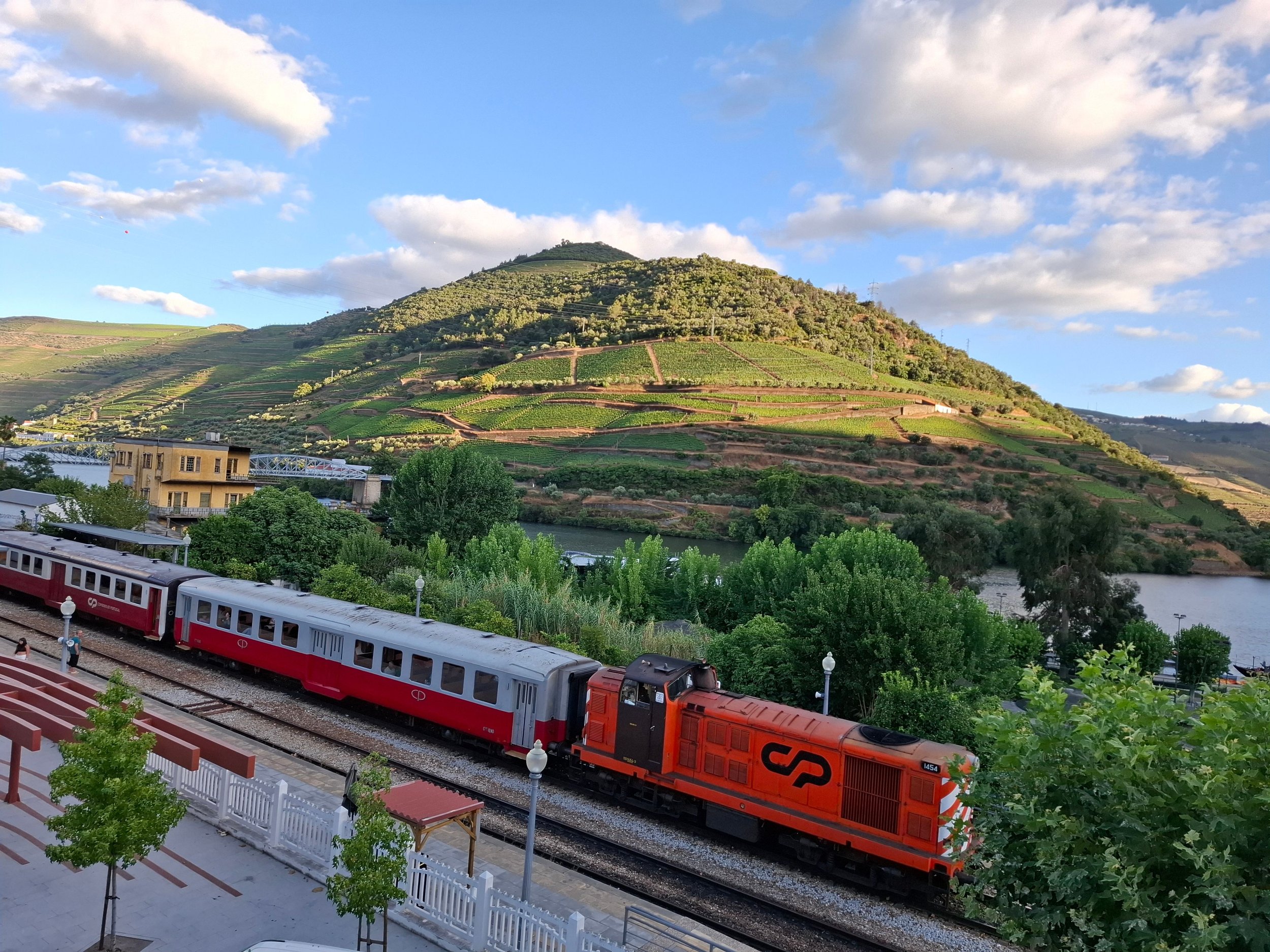
An hour or so inland, the river slows and the hills turn into steps. Terraced vineyards fall to the water and villages stand on the bends. The best days here are simple: a working morning in a room that looks over the vines, a long lunch at the quinta's own table, an afternoon on the water in a traditional rabelo boat.
At harvest, many quintas still tread grapes by foot in stone lagares, the shallow granite tanks, arms linked, singing to keep the rhythm. Inviting a team to join for half an hour does more for trust than any icebreaker. Then let the evening run long, as the valley does.
Four quick questions
Which city fits your team?
Answer all four to see your best fit.
Your best fit
The three answers, in short:
Lisbon, with a coast day out. Easy flights from every office, one hotel for rooms and sessions, and Sintra or Cascais within 45 minutes. Best for larger groups and for celebrating a year together.
Porto, then the Douro. Big decisions need a quieter room. Two days in Porto, then a working day at a quinta above the river. Fewer distractions, longer conversations.
Both, by train. Four nights or more: start in one city, take the train, finish in the other. Nobody backtracks.
Can you do both?
Yes, if the program runs four nights or more. The Alfa Pendular train links the two cities in under three hours, so a move costs about half a day.
Tap a stop
Each stop opens a short note. The line is drawn to scale in time, so the distance on the map is the time in a seat.
Typical travel times, rounded. Drawn to scale by time, not distance.
The stops, at a glance
Porto, base. Granite, river light and port lodges just across the bridge in Gaia. A compact center a team can walk, with Braga and the Douro close by.
Braga, 40 minutes from Porto. A young tech city under a hilltop Baroque sanctuary. Team challenge: climb the nearly 600 steps of Bom Jesus for the view, then ride the 1882 water funicular down.
Douro Valley, about 1 hour 15 minutes from Braga. Terraced vineyards in a UNESCO World Heritage landscape. Workshop days at a quinta, with harvest dinners from mid-September.
Lisbon, base. Portugal's main airport and its widest choice of conference hotels. Seven hills, wide river light and the Atlantic half an hour away.
Sintra, 35 to 45 minutes from the airport. Palaces and gardens in the forested hills. Pena Palace runs on timed entry, so we plan the day back from the slot.
Cascais, 35 to 45 minutes from the airport. A seaside town on the Atlantic, made for a sunrise walk on the promenade and a long seafood lunch.
Treat the train as part of the program, not dead time. Three hours of Atlantic and pine forest out the window, coffee from the bar car, time for a few unhurried one-to-ones that wouldn't happen in a conference room. It's also gentler on the planet than a short internal flight.
The cleanest version flies the group into one city and out of the other, so nobody backtracks. For groups above 40, we usually recommend one base and one well-chosen day out. Our guide to planning for 10, 40 or 100 people explains why.
When to go
Five moments to build a retreat around
-

Lisbon | Late May
Jacaranda season
Purple canopies over the squares and long light before summer.
Plan it: Our favorite window for a first retreat.
-

Lisbon | 12 to 13 June
Santo António
Paper garlands over the old quarters, sardines on bread, the whole city out late.
Plan it: Book rooms early. Keep the night of the 12th free.
-

Porto | 23 to 24 June
São João
The river lit up, fireworks at midnight, grills on every corner.
Plan it: The 24th is a holiday in Porto. Start late.
-

Douro | Mid-September to early October
The harvest
Crates of grapes at golden hour, treading in stone tanks, long lunches.
Plan it: Small groups, weekdays, one quinta (a wine estate).
-

Everywhere | 11 November
São Martinho
Chestnut smoke from street carts and the year's first new wine.
Plan it: Calmer cities, often a warm spell.
Photos: Dmitry Voronov / Unsplash | Pedro Rebelo Pereira / Pexels | Kaya / Pexels
How we check a venue before you decide on it
A beautiful hotel is easy to find. One that works for your whole group is harder. These are the four checks we run on every shortlist:
We count individual rooms, not beds. "Sleeps 100" can mean 50 shared rooms. If every guest needs their own room, we say so in the first email, and it rules out many boutique properties quickly.
We seat everyone together, once. The venue has to seat the whole group for one dinner and one plenary, with breakouts nearby. That first shared meal is where a group becomes a team.
We ask what happens when it rains. Coastal and countryside venues often rely on terraces and gardens. We ask for the indoor room by name, and plan an indoor version of anything on the water, like a cooking class built around the catch you would have seen.
We visit before you sign. We walk the route from the coach drop-off to the meeting room, sit in the plenary at the time you'll use it and check access for every guest. Photos never show the stairs.
A lighter footprint, in either city
Gift something local and useful. Burel wool, Viarco pencils or Couto toothpaste in Porto, Claus Porto soap or cork goods in Lisbon. Less to throw away, and more to talk about.
Eat the season. Ask for menus built on what the market has that week. In Portugal that's rarely a compromise.
Choose one base when you can. Fewer moves means fewer coaches, fewer nights and more time where you came to be.
Spend where people live. Small producers, family quintas and local guides keep the money in the places that make the retreat worth taking.
The details most planners miss
Check the rails before you rely on them. Portugal is upgrading several regional lines, and works sometimes replace trains with buses for months at a time. Group tickets aren't always valid on replacement services. For a team, a private coach is simpler anyway, and it stops where you want. See our current planning notes.
Harvest dates move. Quintas confirm picking dates only a few weeks ahead, so plan the harvest dinner as a flexible evening.
Sintra runs on time slots. Pena Palace entry is by timed slot with no late entry. Plan transfers backward from the slot.
Lisbon rooms cost more. Greater Lisbon has the highest room rates in Portugal (Ambitur, citing INE). Lock hotel blocks early around big congress weeks and the June festivals.
What does each cost?
It depends on dates, hotel tier and what else is happening in the city that week. See what drives cost per person. For per-person ranges by region and group size, request our retreat overview.
Frequently asked questions
-
Lisbon suits larger and multi-office groups that need a conference hotel and easy flights. Porto suits smaller leadership teams that want depth, with Braga and the Douro Valley close by. Group size and travel patterns usually decide it.
-
The Alfa Pendular train takes under three hours. By road it is about three hours.
-
Porto is often the stronger choice. A small group can stay in the city, then move once to the Douro Valley for workshop days, river time and a quinta dinner.
-
Lisbon, in most cases. More hotels can hold a large group with meeting rooms and breakouts under one roof, and more direct flights help when people arrive from several offices.
-
Spring and early summer bring green terraces and easier bookings. The harvest, roughly mid-September to early October, is the most atmospheric time, but dates are confirmed only a few weeks ahead. July and August are hot in the valley.
-
Yes. RuaMar designs and runs retreats for 8 to 150+ guests across mainland Portugal, Madeira and the Azores, including Lisbon, Porto and the Douro. RUAMAR, LDA is a registered travel agency, RNAVT 13739.